Dianne Trueb
UnverifiedMixed Livestock Farm
Our Animals
Cattle
Cattle: Jersey
How We Process
How to Buy
Markets & Stores
Farmers Market
Delivery & Shipping
local delivery
Photos
About Dianne Trueb
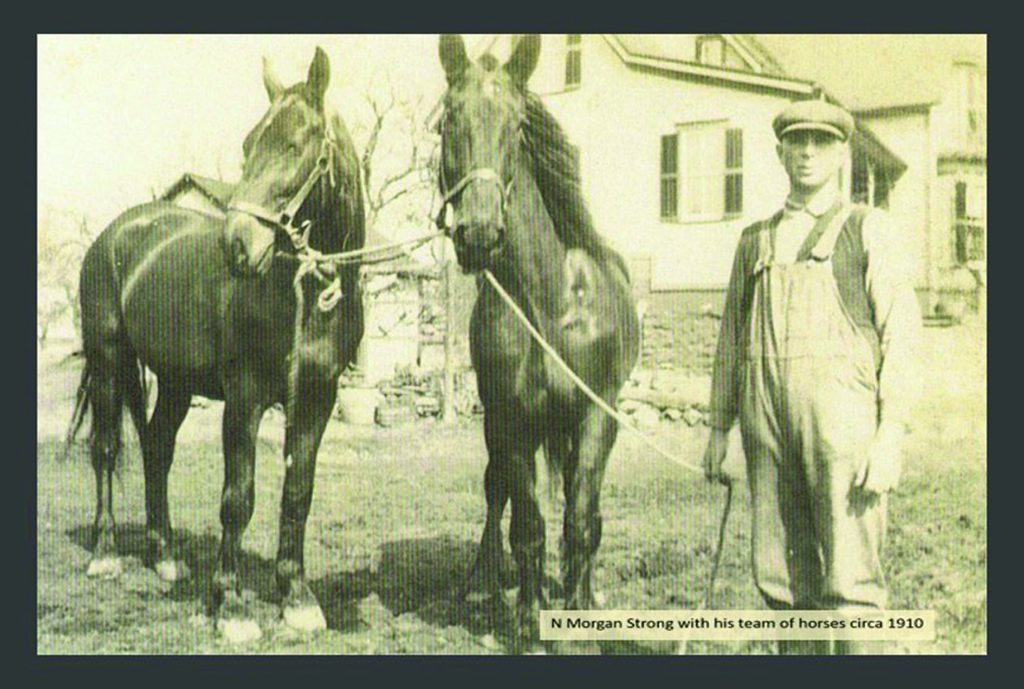
Earlier this year I posted a photo from Images of America, Ellington, by Lynn Kloter Fahy, on the Market facebook page. I was astounded at the number of likes and comments requesting more photos and information on the history of farming in Ellington. As a result, we will be highlighting an Ellington farm each month on the Ellington Farmers’ Market blog. Some of the farms we tell you about will have long ago ceased farming and some are still actively farming today. Ellington’s rich agricultural history spans many generations. I hope you enjoy the blogs. I recently had the honor and pleasure of meeting with Joan Hyde Kummer, the remaining family member to have grown up and participated in farming at the Hyde Farm, located on Somers Road in Ellington. At age 87, with clarity and a keen wit, she shared the history and her personal stories of growing up on the Hyde Farm. In 1813, before it became the Hyde Farm, Peleg Martin of Thompson Connecticut built the federal style, ten-room red brick house about a mile and a half from the center of Ellington. He formed the red bricks by the brook that crossed the property and fired them at a local kiln. Peleg sold the house to Daniel Cushman Kibbe, who in 1856 sold it to Mrs. Kummer’s great, great grandfather, Epraim Hall Hyde and his wife Esther Foster. Epraim operated a dairy and grew broadleaf, open-field tobacco on the land. Epraim and Esther’s son, Elbert, was a soldier in the civil war and wrote many letters home, one of which describes a bullet wound to his face, numbing his jaw and blinding him in his left eye. In the next sentence, he asks about the price of corn and potatoes! Amazingly, Mrs. Kummer possesses the original letter to this day. After the war, Elbert married Marriette, the granddaughter of Peleg Martin. Thus Mrs. Kummer can state that her great-great-great grandfather built the house in which she was raised. This 19th century photograph is of the Hyde Farm on Somers Road. The red brick house was built in 1813 by Peleg Martin. On an 1869 map of Ellington, it is identified as the house of E. F. Hyde. Ellington Historical Society member Robert E. “Bob” Hyde, II, who passed away in 2011, was the son of E. Foster Hyde and grew up on his family’s dairy farm. Bob was also known as the builder of the Ellington Airport across the street from the family home in the 1960s. By the 1880’s a new hay barn with a long “ell” for the cattle attached to its south side sat across the dirt road from the house. Dairy and tobacco farming continued on the land, which was now owned and operated by Robert Hyde, Mrs. Kummer’s grandfather. Because of a shortage of farmhands during World War II, E. Foster Hyde (Robert’s son and Mrs. Kummer’s father) was forced to give up his road contracting business and help his father on the farm. He was in his late 30’s at the time. The following are excerpts from my interview with Mrs. Kummer: “During this period, Dad decided to plant an acre of cucumbers for my sister Cynthia and me to raise and sell to the Silver Lane Pickle Company. His reasoning for this particular form of torture was that it was good for the constitution and would help with college expenses…good point. Every day we picked one- half an acre. Sundays were no exception. At the end of the day we sat under the apple tree and counted them. At the end of the season we bought war bonds…lots of them. Cynthia and I worked the tobacco on the farm from start to finish. We planted, hoed, de-wormed, suckered, and carried the full lathes to the rigging. Since most young men were at war, my grandfather paid us a man’s wage, which was a dollar per hour, and said that we worked better than the men. We did our pickle picking from dawn until tobacco time, and after the tobacco day we finished picking.” “There were other tasks to do. Hay raking… sitting on the top of a rake, I looked down at the hay row far below, and at the rear end of the horse, and prayed that I would not fall off. Horse, rake and
Our Story
Kids at the MarketKids POP ClubYouth Market Day MoreNewsletter Sign UpFind UsMobile APPFarm HistoriesContact Earlier this year I posted a photo from Images of America, Ellington, by Lynn Kloter Fahy, on the Market facebook page. I was astounded at the number of likes and comments requesting more photos and information on the history of farming in Ellington. As a result, we will be highlighting an Ellington farm each month on the Ellington Farmers’ Market blog. Some of the farms we tell you about will have long ago ceased farming and some are still actively farming today. Ellington’s rich agricultural history spans many generations. I hope you enjoy the blogs. Meeting Joan Hyde Kummer I recently had the honor and pleasure of meeting with Joan Hyde Kummer, the remaining family member to have grown up and participated in farming at the Hyde Farm, located on Somers Road in Ellington. At age 87, with clarity and a keen wit, she shared the history and her personal stories of growing up on the Hyde Farm. In 1813, before it became the Hyde Farm, Peleg Martin of Thompson Connecticut built the federal style, ten-room red brick house about a mile and a half from the center of Ellington. He formed the red bricks by the brook that crossed the property and fired them at a local kiln. Peleg sold the house to Daniel Cushman Kibbe, who in 1856 sold it to Mrs. Kummer’s great, great grandfather, Epraim Hall Hyde and his wife Esther Foster. Epraim operated a dairy and grew broadleaf, open-field tobacco on the land. Epraim and Esther’s son, Elbert, was a soldier in the civil war and wrote many letters home, one of which describes a bullet wound to his face, numbing his jaw and blinding him in his left eye. In the next sentence, he asks about the price of corn and potatoes! Amazingly, Mrs. Kummer possesses the original letter to this day. After the war, Elbert married Marriette, the granddaughter of Peleg Martin. Thus Mrs. Kummer can state that her great-great-great grandfather built the house in which she was raised. This 19th century photograph is of the Hyde Farm on Somers Road. The red brick house was built in 1813 by Peleg Martin. On an 1869 map of Ellington, it is identified as the house of E. F. Hyde. Ellington Historical Society member Robert E. “Bob” Hyde, II, who passed away in 2011, was the son of E. Foster Hyde and grew up on his family’s dairy farm. Bob was also known as the builder of the Ellington Airport across the street from the family home in the 1960s. By the 1880’s a new hay barn with a long “ell” for the cattle attached to its south side sat across the dirt road from the house. Dairy and tobacco farming continued on the land, which was now owned and operated by Robert Hyde, Mrs. Kummer’s grandfather. Because of a shortage of farmhands during World War II, E. Foster Hyde (Robert’s son and Mrs. Kummer’s father) was forced to give up his road contracting business and help his father on the farm. He was in his late 30’s at the time. The following are excerpts from my interview with Mrs. Kummer: “During this period, Dad decided to plant an acre of cucumbers for my sister Cynthia and me to raise and sell to the Silver Lane Pickle Company. His reasoning for this particular form of torture was that it was good for the constitution and would help with college expenses…good point. Every day we picked one- half an acre. Sundays were no exception. At the end of the day we sat under the apple tree and counted them. At the end of the season we bought war bonds…lots of them. Cynthia and I worked the tobacco on the farm from start to finish. We planted, hoed, de-wormed, suckered, and carried the full lathes to the rigging. Since most young men were at war, my grandfather paid us a man’s wage, which was a dollar per hour, and said that we worked better than the men. We did our pickle picking from dawn until tobacco time, and after the tobacco day we finished picking.” “There were other tasks to do. Hay raking… sitting on the top of
Meet the back
Farmers Market Owner · Since 1902
What Sets This Farm Apart
UnverifiedEvery practice listed here means something specific. Tap any practice to learn what it requires and why it matters.
Beef
Dairy
Poultry & Eggs
Not verified by Bhumi. This farm's practices have not been independently verified. Product claims (grass-fed, pasture-raised, organic, etc.) are based on publicly available information and have not been confirmed.
Hours & Operations
Location & Directions
Quick Facts
Practices