



Eastern Market Corporation
UnverifiedDiversified Family Farm
Detroit’s Historic Public Market
Photos
About Eastern Market Corporation
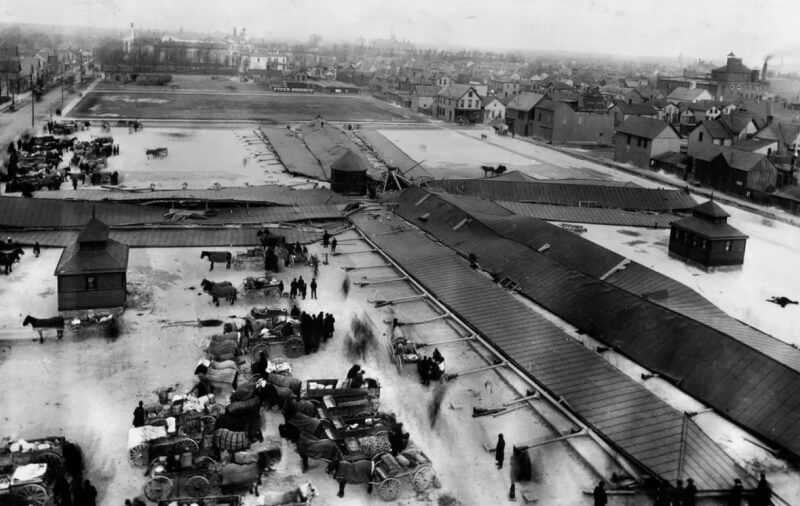
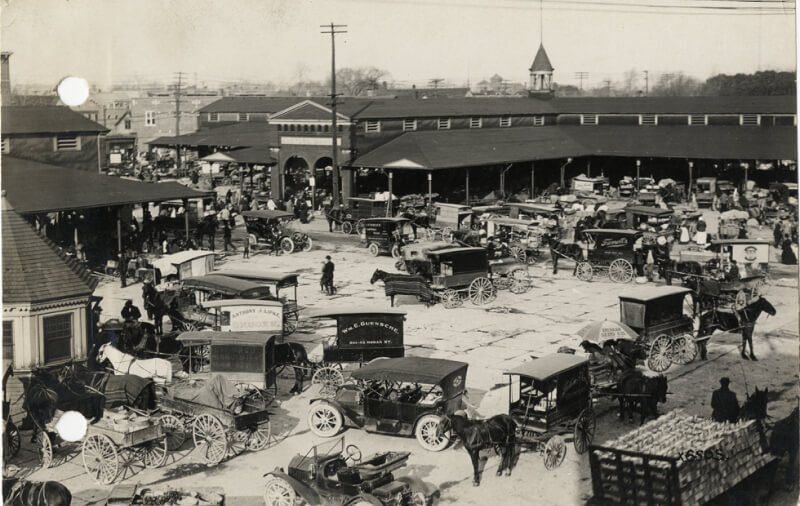
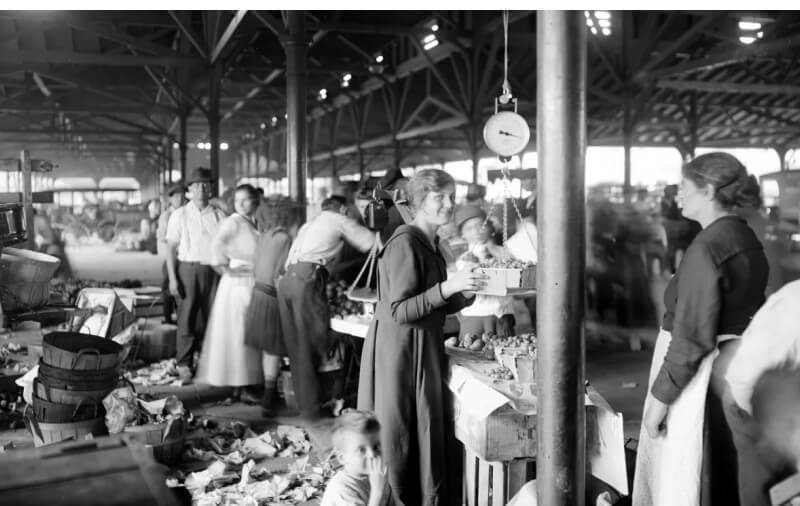
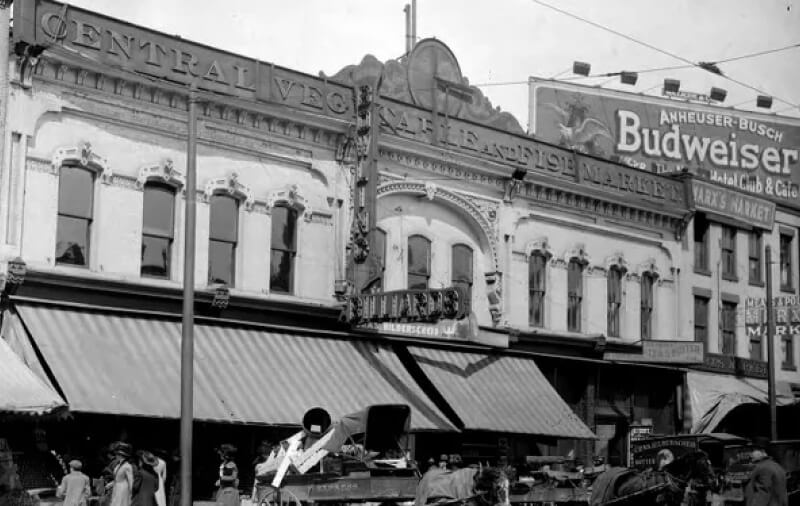
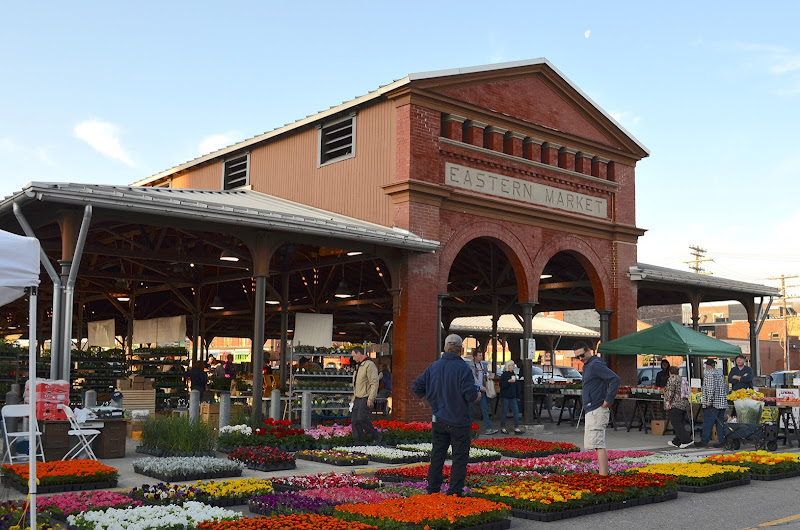
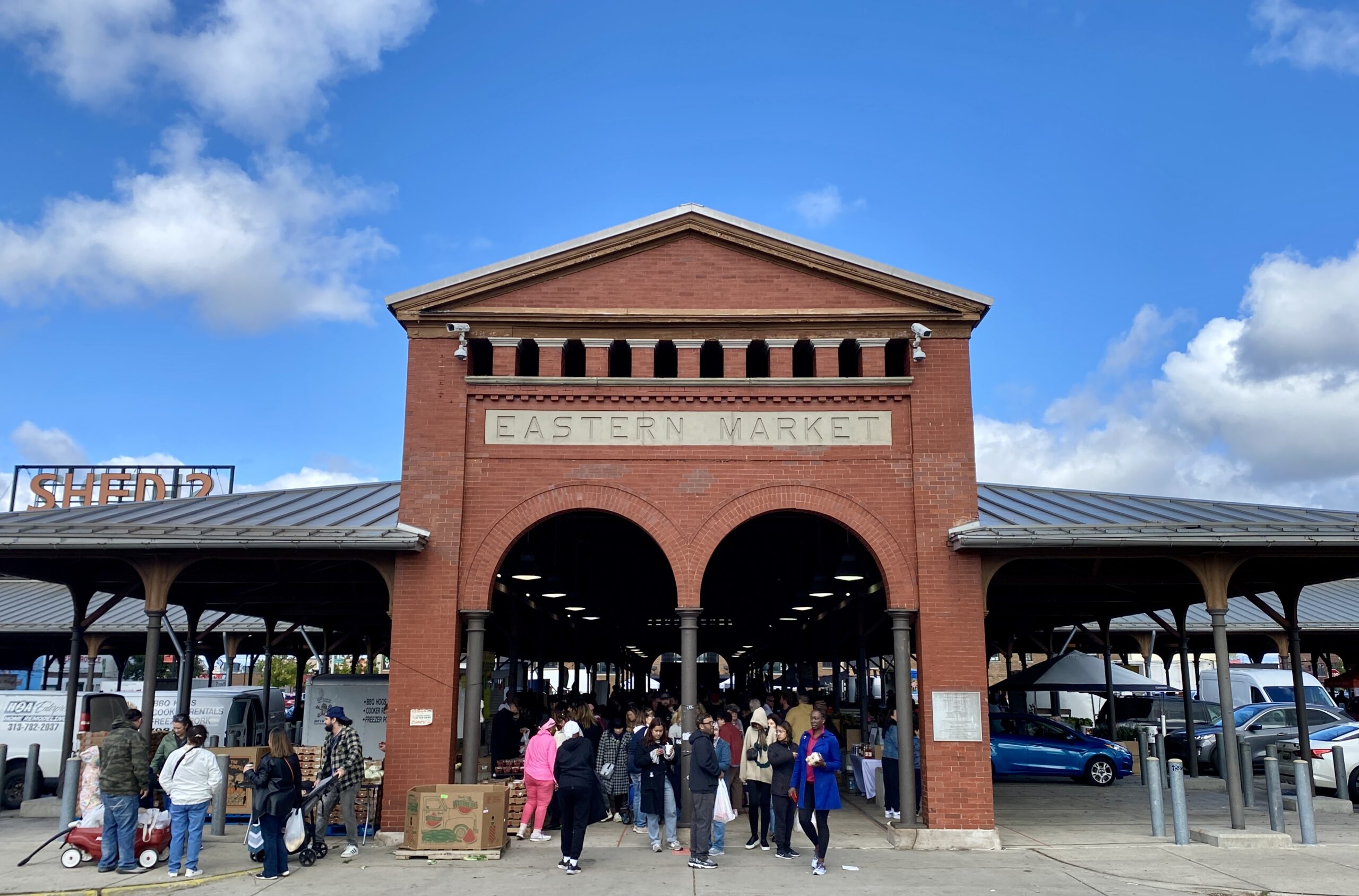
Since it began in the 1800s, Eastern Market has gradually become a cornerstone, nourishing its residents by providing fresh and nutritious food throughout Southeastern Michigan. In more recent years, Eastern Market Partnership has built an infrastructure around the market to support our unwavering mission to enrich Detroit—nutritionally, culturally and economically. As a 501(c)(3) nonprofit, our goal is to maintain Eastern Market’s: People come first — always. We center the needs of our community in everything we do, building programs and spaces that uplift those who grow, create, and live in Detroit. Eastern Market is a meeting place — of farmers and families, neighbors and newcomers, culture and commerce. We strengthen the bonds that help communities thrive through shared food, stories, and space. This market has roots and we honor our history and culture by staying true to who we are — while always welcoming new voices, flavors, and ideas that move us forward. We believe development should benefit everyone. That’s why we invest in inclusive economic opportunities that reduce barriers, support local ownership, and reflect the diversity of Detroit. We shepherd Eastern Market’s rich history to nourish a healthier, wealthier, and happier Detroit. At eripuit signiferumque sea, vel ad mucius molestie, cu labitur iuvaret vulputate sed. By 1882, the Russell Street Cemetery was relocated and an informal eastern market began (considered “eastern” due to its position east of downtown, where the City’s central market operated). A temporary Shed was constructed in 1886 consisting of iron support poles with a raised roof. The building blew down during a storm in 1890. With the City of Detroit undergoing a period of tremendous growth, Eastern Market operated as an informal market along Russell Street at High Street (now part of the Fisher Freeway service drive). The City’s Central Market was unable to accommodate the growing population and a plan emerged to develop two markets further outside of the downtown. Given the success of the existing informal market, the City formally designated Eastern Market in 1891. The new market required a permanent building to be constructed that would become known as Shed 1, bounded by Russell, Vernor, Market and High Streets. Similar in style to the historic Shed 2, with cast iron columns and an exposed wood frame roof, the structure contained more than 150 covered stalls. As the new market grew, more covered space was needed. Shed 2 was constructed one block directly north of Shed 1and was nearly identical to Shed 1, while being just a bit smaller. The commercial district continued to grow as well: additional food-related business expands with purveyors and market-related businesses concentrated along the western edge of the neighborhood and Detroit’s growing meatpacking industry expanding along Orleans Street, aided by the proximity to the railroad tracks. Shed 2 was renovated over 2007-2008 over the course of 10 months and at a cost of nearly $2M for construction. Eastern Market’s first farmers came via horse and wagon and were mainly from rural farming communities within a 15-to-20 mile radius east of Gratiot Avenue. As early as 1899, Eastern Market Saturdays flourished, attracting 13,000-15,000 visitors. The market opened to wholesalers at 6 AM and retailers at 9 AM. With a main entrance on Vernor (now the Fisher Freeway Service Drive) Gratiot Central Market was built in 1915 as a market hall focused primarily on meat sellers. The structure was designed by prominent Detroit architects, Smith, Hinchman & Grylls. In 1966, an interior fire caused damage to the roof framing and other interior structure. The exterior wall on the Gratiot Avenue side remained intact and the market reopened in late 1968. A second fire in 1995 completely gutted the interior of the building and left only the Gratiot Avenue façade standing. The building was revamped to a one-story, open-plan facility that stands to
Our Story
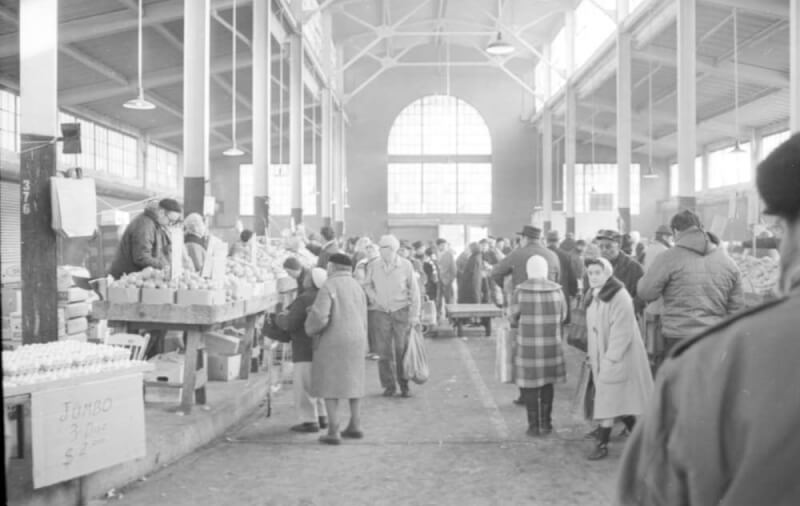
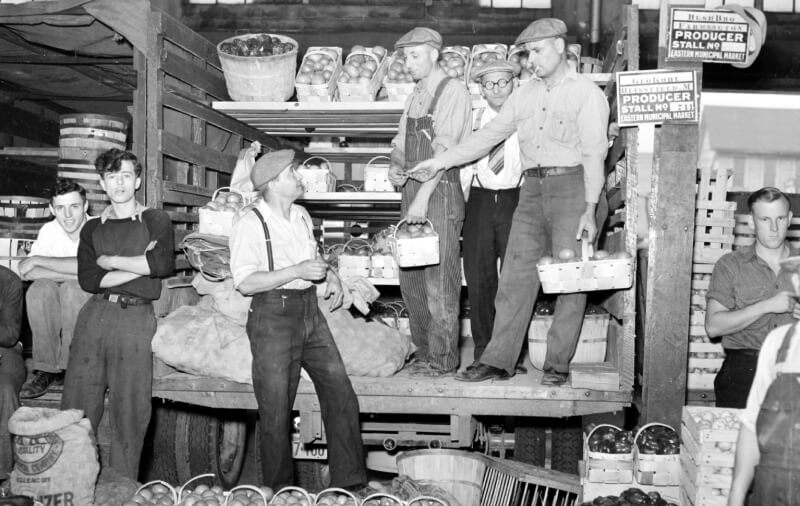
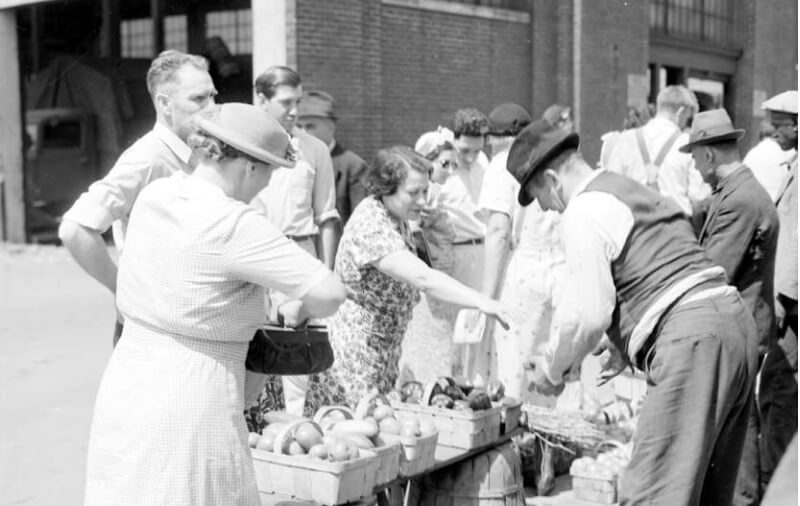
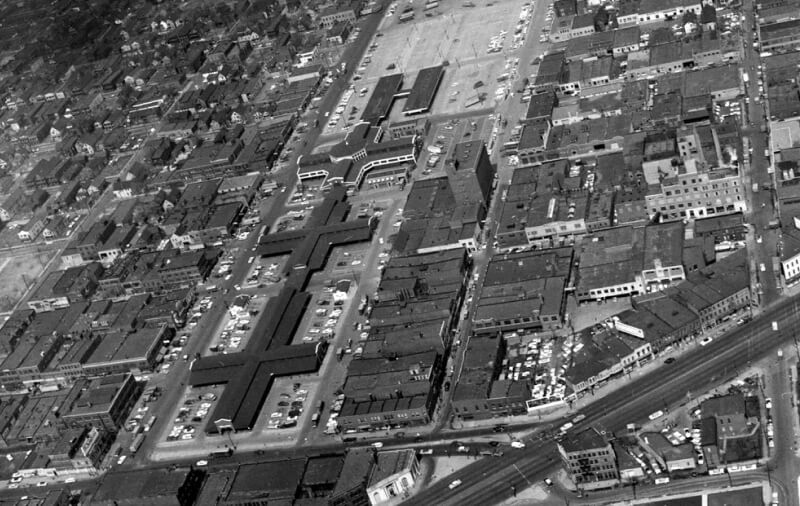
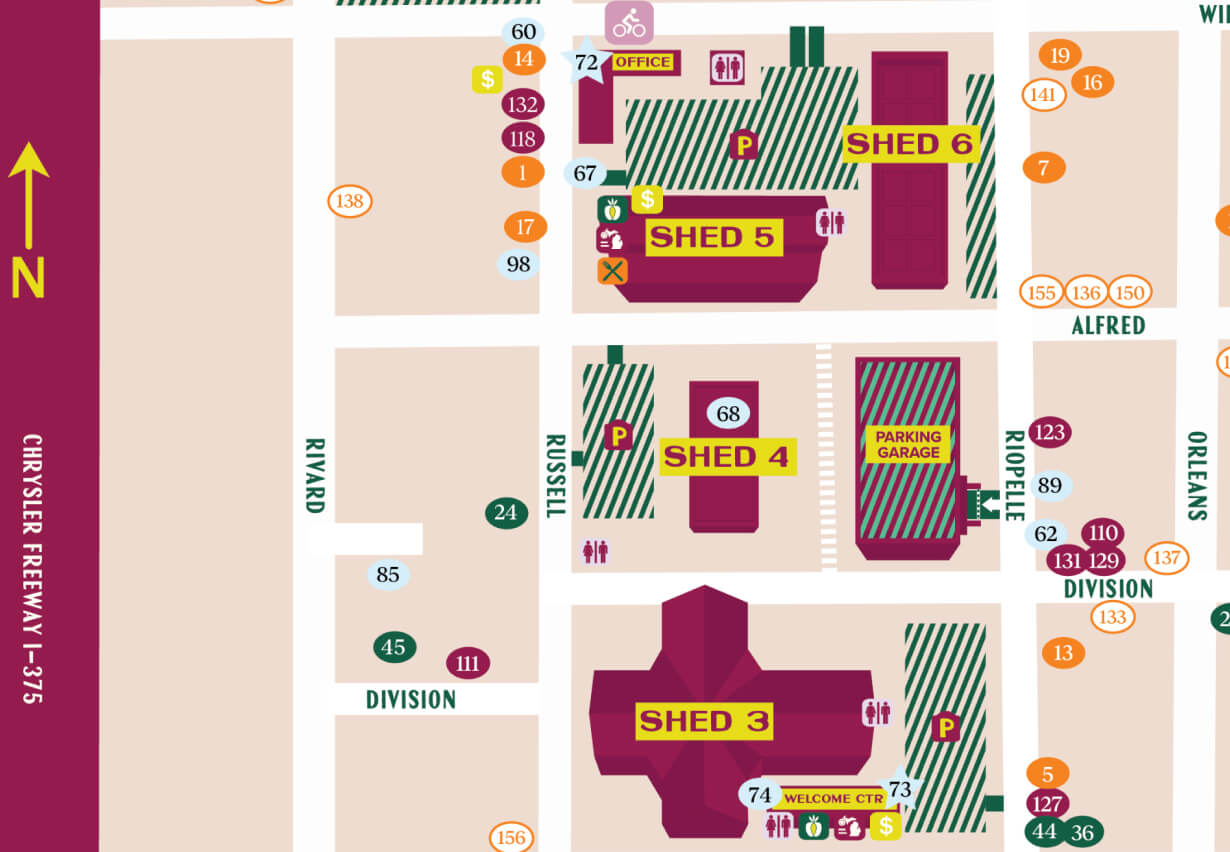
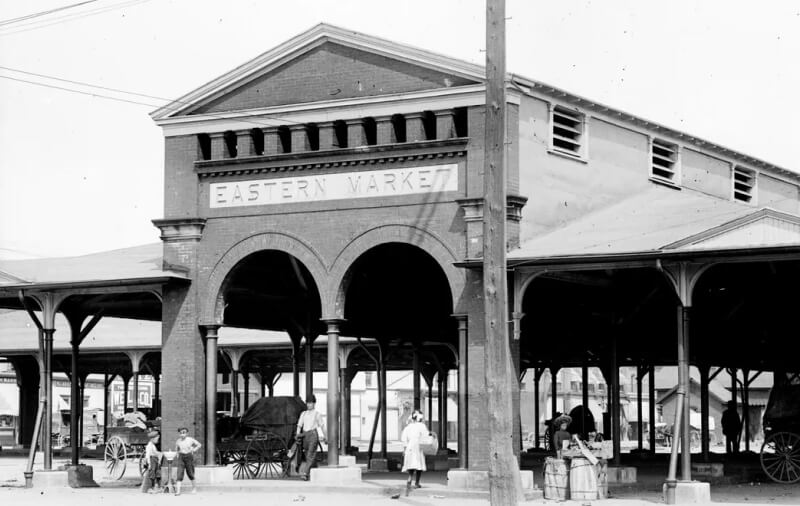
By 1882, the Russell Street Cemetery was relocated and an informal eastern market began (considered “eastern” due to its position east of downtown, where the City’s central market operated). A temporary Shed was constructed in 1886 consisting of iron support poles with a raised roof. The building blew down during a storm in 1890. With the City of Detroit undergoing a period of tremendous growth, Eastern Market operated as an informal market along Russell Street at High Street (now part of the Fisher Freeway service drive). The City’s Central Market was unable to accommodate the growing population and a plan emerged to develop two markets further outside of the downtown. Given the success of the existing informal market, the City formally designated Eastern Market in 1891. The new market required a permanent building to be constructed that would become known as Shed 1, bounded by Russell, Vernor, Market and High Streets. Similar in style to the historic Shed 2, with cast iron columns and an exposed wood frame roof, the structure contained more than 150 covered stalls. As the new market grew, more covered space was needed. Shed 2 was constructed one block directly north of Shed 1and was nearly identical to Shed 1, while being just a bit smaller. The commercial district continued to grow as well: additional food-related business expands with purveyors and market-related businesses concentrated along the western edge of the neighborhood and Detroit’s growing meatpacking industry expanding along Orleans Street, aided by the proximity to the railroad tracks. Shed 2 was renovated over 2007-2008 over the course of 10 months and at a cost of nearly $2M for construction. 1899 through early 1900s Eastern Market’s first farmers came via horse and wagon and were mainly from rural farming communities within a 15-to-20 mile radius east of Gratiot Avenue. As early as 1899, Eastern Market Saturdays flourished, attracting 13,000-15,000 visitors. The market opened to wholesalers at 6 AM and retailers at 9 AM. With a main entrance on Vernor (now the Fisher Freeway Service Drive) Gratiot Central Market was built in 1915 as a market hall focused primarily on meat sellers. The structure was designed by prominent Detroit architects, Smith, Hinchman & Grylls. In 1966, an interior fire caused damage to the roof framing and other interior structure. The exterior wall on the Gratiot Avenue side remained intact and the market reopened in late 1968. A second fire in 1995 completely gutted the interior of the building and left only the Gratiot Avenue façade standing. The building was revamped to a one-story, open-plan facility that stands to this day. With the contract for construction let in 1921, the first all-weather shed at the market opened in August of 1922. The building housed over 100 stalls for vendors and farmers. Two out buildings were also constructed: one at Adelaide Street (renovated in 1990 into the Welcome Center), which housed a market office and restrooms, and a second on Division, which housed a garage, incinerator and horse pound and no longer stands. Shed 3 was renovated in 2009, which included 11 months of construction and a $6.5M investment. All of Detroit’s public markets, which also included the Chene-Ferry and Western Markets, flourished during the Great Depression. With unemployment at a peak, jobless laborers returned to farming and the markets offered dependable places to sell produce. Sheds 4 and 5 were originally constructed as unadorned canopy structures with walkways down the middle. Shed 4 was ultimately reduced in size to what stands now and the original Shed 5 was torn down in 1980 for a new, enclosed shed and parking structure. Detroit’s markets flourished once again as a solution to wartime food shortages. During the age of hard-to-find ration coupons, black-market pricing was a standard practice and even published in market news bulletins. Post WWII through 1960s With the suburbanization of American cities
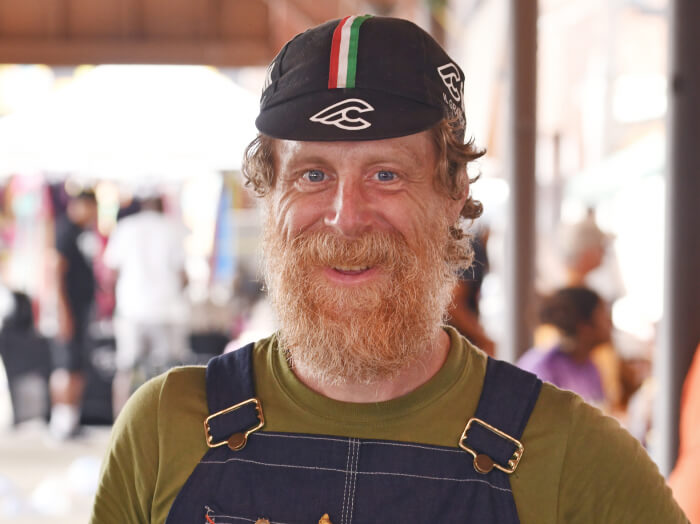
Meet null
Farm Owner · Since 2006
Not verified by Bhumi. This farm's practices have not been independently verified. Product claims may be based on publicly available information and have not been confirmed.