




How We Process
How to Buy
Markets & Stores
Farmers Market
Photos
About Toledo Farmers' Market
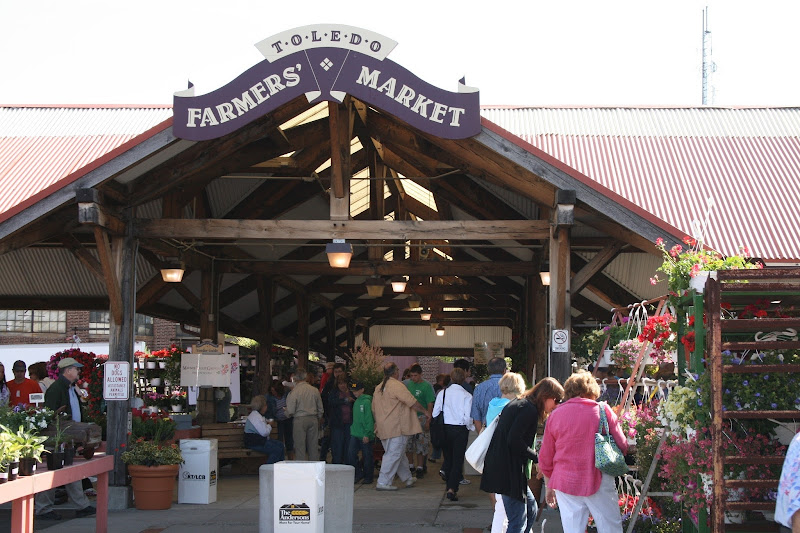
A brief history of the Downtown Farmers Market The Farmers' Market of Toledo began in1832when many of the area farmers needed a place to sell their produce, and the community needed a centrally located place to shop. The Market started on Monroe, Superior, and Washington Streets. Here this outdoor market was on a streetcar line and easy access for most of the community. At that time you could shop this popular Market Square for everything from live poultry, vegetables, fruit, eggs, and everything in between. In1913, the outdoor wholesale market closed, and the Market temporarily moved indoors. The outdoor Market reopened in 1917 at a new location: Speilbusch Avenue at Orange and Ontario Streets. Currently, the City of Toledo uses this area for Police parking. On this site, stalls were built with tables on both sides for the vendors and a roof overhead. These new stalls would accommodate vendors and trucks on the outside, and customers inside with the convenience of shopping in inclement weather. In1928, a building on Erie Street was remodeled to function as a combined indoor wholesale market and an exhibition hall. The old stalls from Speilbusch were then moved to the area at the back of the inside market. These four long sections were placed on land that was deeded to the City of Toledo for a Farmers' Market. The back row of stalls, near the creek, was where the poultry and egg vendors set up. The front row of stalls was called Wholesale Row. This was where the wholesalers came out and sold after the inside wholesale market closed for the day. At the time more than 200 vendors were on the Market. Dedicated days for sales were Tuesday, Thursday, and Saturday. The area around the Farmers' Market was also lined with other wholesale houses. Tiedtke's horse barn was where Tibbets is now. Chariott Foods was then a City of Toledo parking garage. The inside wholesale market was busy with many vendors and farmers selling to mom-and-pop grocery stores. Inside was a little restaurant where many of the vendors and customers had an early breakfast. It was not uncommon to see some of the vendors sitting on a stool having coffee with blackjacks hanging out of their back pockets to protect the large amount of cash they carried. Saturday was a busy experience at the Market. The old stalls were painted in bright colors to make them look new. Shoppers had to park on Superior and St. Clair Streets as parking on the Market was at a premium. Back then many housewives came to the Farmers' Market to help with the family budget. It was not uncommon to see mom and dad buying bushels of corn, beans, peaches, potatoes, and other products to freeze or can for the long winter months. Our present US representative, Marcy Kaptur, and her parents were also weekly shoppers at the Farmers' Market. The City of Toledo continued to run the Market, however, the Market area slowly changed. The stalls slowly sunk into the soft soil making it difficult for a tall person to shop! The inside wholesale market closed and the City began to use the space for expanding City departments. Business kept on as usual. The farmers still come in large numbers on Saturday and use the Farmers' Market during the week for wholesale purposes. Marcy Kaptur kept a close eye on the Farmers' Market finally working to get a HUD grant to upgrade the Market facilities. Phase 1 was the building of a new bridge over the creek and linking Superior and St. Clair Streets. The building progress was slow and farmers and visitors to the Market watched hoping that the changes would help to bring people back to the downtown area. Phase 2 was the start of rebuilding the Market. This part was the structure closest to Superior Street. It was around this time that the farmers at the Market decided to form the Farmers' Market Association of Toledo. This agricultural co-op was formed with the help of the Warehouse District and the Department of Agriculture. With many of
Our Story
MARKETS ▼Toledo Farmers' Market Westgate Market Toledo Farmers' Market VENDORS ▼Our Vendors Become a Vendor Flower Day Application Flower Day Application ABOUT US ▼Market History PRODUCE PERKS SNAPFAQRecipes Photo gallery RESOURCES ▼DOWNLOAD FILESHarvest Calendar A brief history of the Downtown Farmers Market The Farmers' Market of Toledo began in1832when many of the area farmers needed a place to sell their produce, and the community needed a centrally located place to shop. The Market started on Monroe, Superior, and Washington Streets. Here this outdoor market was on a streetcar line and easy access for most of the community. At that time you could shop this popular Market Square for everything from live poultry, vegetables, fruit, eggs, and everything in between. In1913, the outdoor wholesale market closed, and the Market temporarily moved indoors. The outdoor Market reopened in 1917 at a new location: Speilbusch Avenue at Orange and Ontario Streets. Currently, the City of Toledo uses this area for Police parking. On this site, stalls were built with tables on both sides for the vendors and a roof overhead. These new stalls would accommodate vendors and trucks on the outside, and customers inside with the convenience of shopping in inclement weather. In1928, a building on Erie Street was remodeled to function as a combined indoor wholesale market and an exhibition hall. The old stalls from Speilbusch were then moved to the area at the back of the inside market. These four long sections were placed on land that was deeded to the City of Toledo for a Farmers' Market. The back row of stalls, near the creek, was where the poultry and egg vendors set up. The front row of stalls was called Wholesale Row. This was where the wholesalers came out and sold after the inside wholesale market closed for the day. At the time more than 200 vendors were on the Market. Dedicated days for sales were Tuesday, Thursday, and Saturday. The area around the Farmers' Market was also lined with other wholesale houses. Tiedtke's horse barn was where Tibbets is now. Chariott Foods was then a City of Toledo parking garage. The inside wholesale market was busy with many vendors and farmers selling to mom-and-pop grocery stores. Inside was a little restaurant where many of the vendors and customers had an early breakfast. It was not uncommon to see some of the vendors sitting on a stool having coffee with blackjacks hanging out of their back pockets to protect the large amount of cash they carried. Saturday was a busy experience at the Market. The old stalls were painted in bright colors to make them look new. Shoppers had to park on Superior and St. Clair Streets as parking on the Market was at a premium. Back then many housewives came to the Farmers' Market to help with the family budget. It was not uncommon to see mom and dad buying bushels of corn, beans, peaches, potatoes, and other products to freeze or can for the long winter months. Our present US representative, Marcy Kaptur, and her parents were also weekly shoppers at the Farmers' Market. The City of Toledo continued to run the Market, however, the Market area slowly changed. The stalls slowly sunk into the soft soil making it difficult for a tall person to shop! The inside wholesale market closed and the City began to use the space for expanding City departments. Business kept on as usual. The farmers still come in large numbers on Saturday and use the Farmers' Market during the week for wholesale purposes. Marcy Kaptur kept a close eye on the Farmers' Market finally working to get a HUD grant to upgrade the Market facilities. Phase 1 was the building of a new bridge over the creek and linking Superior and St. Clair Streets. The building progress was slow and farmers and visitors to the Market watched hoping that the changes would help to bring people back to the downtown area. Phase 2 was the start of rebuilding the Market. This part was the stru
Meet approved
Farm Owner
What Sets This Farm Apart
UnverifiedEvery practice listed here means something specific. Tap any practice to learn what it requires and why it matters.
Not verified by Bhumi. This farm's practices have not been independently verified. Product claims (grass-fed, pasture-raised, organic, etc.) are based on publicly available information and have not been confirmed.
Hours & Operations
Location & Directions
Quick Facts
Practices